HGW Resources

HGW Blog

Practical guides for identifying hydraulic fittings, comparing connection styles, checking applications, reviewing materials, and finding relevant HGW product categories.

Connection Types

Approve AN-to-JIC Substitution from Drawings, Not Dash Names

Mar 15th 2023

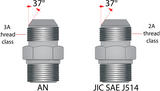
AN and JIC parts are often physically related through 37-degree flare geometry, but a maintenance substitution is not approved merely because both catalogs use a dash number. The replacement must match the mating interface and meet the technical and regulatory requirements of the equipment. Decode the dash number correctly In common 37-degree flare naming, a dash size is generally associated with
Connection Types

Build a Reliable ORB Port Around O-Ring Compression and Spotface Condition

Mar 7th 2023

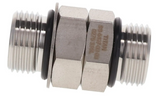
An SAE O-ring boss connection keeps thread retention and fluid sealing in different features. Straight threads hold the male fitting in the port, while an elastomer is compressed at the port entrance. Reliable service depends on the O-ring, groove, chamfer, spotface, fitting position, and thread engagement working together. Read the port anatomy before selecting the adapter The male ORB end has Un
Connection Types

Verify a JIC Connection at the 37 Degree Seat, Not Only the Thread

Mar 2nd 2023

A JIC connection seals where two 37-degree metal surfaces meet. The straight threads draw those seats together but do not seal pressure. That division explains both the connection’s serviceability and its most common identification error: a different fitting can share or nearly match the thread while presenting the wrong seat. Inspect the complete male and female interface On a male JIC end, ident
Connection Types

Specify NPT Fittings by Nominal Size, Taper, Sealant, and Port Strength

HGW Hydraulics on Feb 22nd 2023

NPT is familiar across U.S. hydraulic, pneumatic, plumbing, instrument, and process equipment, yet it is easy to misidentify because the marked pipe size is not the measured thread diameter. A correct order needs the nominal size, male or female form, material, pressure and temperature capability, and the connection on the opposite end. Recognize the geometry before reading the size National Pipe
Fitting Guides

Place Hydraulic Hose Swivels Where Machine Motion Would Otherwise Twist the Line

Feb 16th 2023

A hydraulic swivel is useful when a known machine motion would otherwise wind torsion into a hose. It is not a general cure for a line that is too short, routed below minimum bend radius, or connected with the wrong elbow. The design task is to identify the motion, decide where rotation belongs, and select a joint qualified for that duty. Observe the equipment through its full cycle Draw or record
Fitting Guides

Hose Barb Connections: Matching Tube ID, Barb Geometry, and Retention

Feb 7th 2023

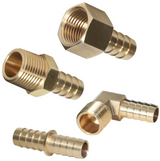
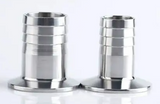
A hose barb is simple only after its dimensions, materials, and retention method have been matched to the tube. The ridges on the stem stretch a flexible hose during insertion. The hose then recovers behind those ridges, producing grip and contact around the stem. That mechanism is useful in many liquid, air, vacuum, and low-pressure circuits, but a connection that merely feels tight is not automa
Applications

Qualify a Multi-Purpose Steel-Braid Hose Before Consolidating Inventory

Feb 1st 2023

A flexible steel-braid hose can cover several hydraulic applications, but no hose should replace a warehouse full of products on a marketing claim alone. Consolidation is an engineering and inventory decision made size by size, circuit by circuit, and with the finished hose-end system included. Define the candidate from its current data sheet Record the manufacturer, hose family, date or revision
Materials

304 vs 316 Stainless Hose Ends: Chlorides, Corrosion, and Selection

Jan 24th 2023

304 and 316 are both austenitic stainless steel families used for fittings and fluid-system components. Their shared chromium content supports formation of a passive oxide film. The practical difference is that 316 normally includes molybdenum, which improves resistance to pitting and crevice corrosion in many chloride environments. That advantage is meaningful, but grade selection still depends o
Fitting Guides

Stainless Hose End Families for Corrosive Hydraulic and Fluid Service

Jan 19th 2023

Stainless steel hose ends are selected when the fluid or surrounding environment makes ordinary plated steel difficult to maintain. The alloy can improve corrosion resistance, but it does not determine connection type or hose compatibility. A stainless JIC fitting still seals at a 37-degree flare; stainless ORFS still uses a face O-ring; a stainless crimp stem still requires the approved hose and
Materials

Stainless Pipe vs Tube: Ordering Language, Dimensions, and Applications

Jan 11th 2023

Stainless pipe and stainless tube can come from similar alloys and manufacturing routes, but they are ordered through different dimensional systems. Pipe is commonly specified by Nominal Pipe Size and schedule. Tube is commonly specified by actual outside diameter and wall thickness. That language determines which fittings, calculations, and tolerances apply. The difference is not simply that pipe