HGW Resources

HGW Blog

Practical guides for identifying hydraulic fittings, comparing connection styles, checking applications, reviewing materials, and finding relevant HGW product categories.

Maintenance

Read Hydraulic Adapter Corrosion as Evidence, Not Just Surface Rust

Aug 17th 2022

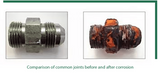
Corrosion on a hydraulic adapter is evidence about the environment, material, installation, and maintenance history. A useful inspection does more than note that the fitting looks rusty. It identifies where attack began, whether a sealing or pressure-carrying surface is affected, and what must change before the replacement is installed. Map the location before judging severity Photograph the fitti

Connection Types

Bridge Mixed Thread Standards with a Verified Two-End Adapter

Aug 9th 2022

A hydraulic machine does not need one thread standard everywhere. Imported equipment, U.S. replacement hose and component ports can legitimately use different systems when a verified adapter preserves the sealing method on each side. The unsafe act is forcing unlike threads together or assuming that an adapter “unifies” the entire machine. Identify both original pressure boundaries NPT uses tapere
Materials

Specify Coolant Hose from Fluid Chemistry, Temperature, and Fitting Materials

HGW Hydraulics on Aug 4th 2022

A line carrying engine coolant or process coolant should not be specified from a hydraulic-oil hose description alone. Water, glycol, inhibitors, contamination, and temperature cycling create a different compatibility problem from petroleum hydraulic fluid. The complete assembly has to be evaluated as a coolant component. Begin with the actual coolant formulation Record the coolant type, water-to-
Maintenance

Manage Hydraulic Hose Temperature at the Tube, Cover, and Coupling

Jul 27th 2022

A hydraulic hose experiences temperature from both sides. Fluid heats the inner tube and coupling interface, while engines, exhaust, sunlight, weather and nearby process equipment affect the cover. The two temperatures can be different at the same moment. Hose selection and diagnosis should record both instead of relying on one reservoir reading. Compare continuous and intermittent limits Hose dat
Connection Types

Choose Flared or Flareless Tube Ends from Tube Preparation and Duty

Jul 21st 2022

Flared and flareless connections solve the same basic problem by different load paths. A flared joint forms the tube into a mating seat. A flareless joint grips an unflared tube with a ring, sleeve or ferrule while sealing at defined contacts. Neither method is universally faster, stronger or better under vibration. The complete standard and tube preparation determine performance. Understand what
Materials

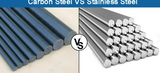
Choose Carbon Steel or Stainless Adapters from the Actual Corrosion Mechanism

HGW Hydraulics on Jul 12th 2022

Carbon steel and stainless adapters can both perform reliably when their material and surface system match the fluid and environment. Stainless is not automatically ten times longer-lived, and carbon steel does not begin corroding quickly in every controlled location. Separate external and internal exposure Humidity, road salt, seawater spray, fertilizer, washdown, mine water, and chemicals attack
Fitting Guides

Four Ways to Join Instrumentation Tube: Ferrule, Cone-and-Thread, Welded, and Push-In

HGW Hydraulics on Jul 6th 2022

Instrumentation tubing carries more than fluid from one point to another. It connects control valves, pressure and temperature instruments, flow meters, level devices, sampling systems, and calibration equipment. A joint must support the process conditions while remaining practical to fabricate, inspect, and maintain. Four connection methods cover very different duties: ferrule compression fitting
Connection Types

Read DIN Fitting Names as Standards, Series, and Sealing Geometry

HGW Hydraulics on Jun 28th 2022

Germany’s national standards organization is abbreviated DIN. The letters refer to its German name, Deutsches Institut für Normung. DIN does not name one fitting. DIN-origin and harmonized EN/ISO documents cover different metric threads, 24-degree tube connections, cones, ports, valves, hose ends, materials, and test requirements. Identify the exact connection standard DIN 2353 is historically ass
Applications

Why DIN Connections Appear in More U.S. Maintenance Inventories

HGW Hydraulics on Jun 23rd 2022

DIN metric connections are becoming more visible in U.S. maintenance because equipment platforms and supply chains are global. Imported European machinery, U.S.-built equipment for export, and multinational OEM designs can place DIN/ISO tube or hose interfaces beside JIC, ORFS, ORB, and NPT. This trend is a compatibility and inventory issue, not proof that DIN is universally higher pressure or mor
Connection Types

Distinguish 24-Degree Tube, Standpipe, and Banjo Connection Forms

HGW Hydraulics on Jun 15th 2022

European mobile and industrial equipment can place several metric connection forms within one circuit. A 24-degree cone, a tube-series designation, a standpipe and a banjo do not describe four interchangeable fittings; each tells a different part of the connection story. Identification begins at the sealing surface and load path. Recognize the 24-degree cone interface ISO 8434-1 covers defined 24-