HGW Resources

HGW Blog

Practical guides for identifying hydraulic fittings, comparing connection styles, checking applications, reviewing materials, and finding relevant HGW product categories.

Maintenance

Calculate Hydraulic Leak Cost from Measured Loss and Root Cause

HGW Hydraulics on Mar 31st 2022

A hydraulic leak costs more than the replacement fitting. Fluid loss, cleanup, disposal, labor, lost production, contaminated product and secondary component damage can all exceed the price of the visible wet part. Published drop-per-minute examples are poor budgets because drop size, operating time and oil price vary. Measure the real loss and its consequences. Build the cost from operating data
Fitting Guides

Assemble ORFS Connections with a Product-Specific Clamp Method

HGW Hydraulics on Mar 23rd 2022

An ORFS connection seals when a captured O-ring at one flat face is compressed by the mating face. The straight thread and swivel nut provide clamp load; they do not seal through thread interference. Assembly should control the face, O-ring, alignment and tightening condition as one process. Verify the interface before handling the seal Confirm thread, size, gender, face geometry and fitting stand
Connection Types

Build DIN Cap and Plug Kits Around Tube Series, Not Case Size

HGW Hydraulics on Mar 17th 2022

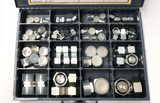
A larger plastic case does not make a DIN cap-and-plug kit more useful. The kit succeeds when every cap and plug is matched to the installed light or heavy tube series and protects an open connection without damaging its seat. Series and tube OD control identity DIN/ISO 24-degree tube fittings pair tube outside diameter with metric thread and series. Light-series examples can use M12 × 1.5 through
Connection Types

Separate BSPP Retaining Threads from BSPT Thread Seals

HGW Hydraulics on Mar 8th 2022

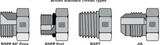
British Standard Pipe covers parallel and tapered thread forms that can share a nominal pipe size while sealing in different locations. BSPP usually retains a separate seat or seal; BSPT develops its pressure boundary in the tapered thread joint under the specified sealing practice. Confusing the retention thread with the seal is more dangerous than confusing the abbreviations. Read G and R as sta
Connection Types

Verify DIN Four-Bolt Flanges Beyond the Form R or Form S Label

HGW Hydraulics on Mar 2nd 2022

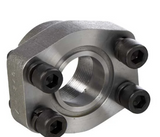
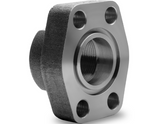
DIN four-bolt hydraulic flanges use an O-ring face and bolted clamp or flange load, but similarity to SAE or JIS patterns does not prove interchangeability. Form R and Form S are starting classifications; exact dimensions and ratings decide the joint. The seal and clamp have separate functions The male flange head carries an O-ring groove against a flat component port or mating face. Bolts provide
Connection Types

Identify 24-Degree Metric Tube Connections by Series and Seal Design

HGW Hydraulics on Feb 22nd 2022

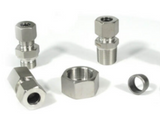
“DIN metric fitting” is common shop language, but metric threads appear in many connection systems. A verified 24-degree tube connection needs a tube outside diameter, thread, series and sealing design—not only a millimeter measurement. DIN 2353 is a familiar historical designation, while ISO 8434-1 provides current general and dimensional requirements for 24-degree cone connectors within its scop
Connection Types

DIN German Threads: Metric Hydraulic Connection Basics

HGW Hydraulics on Feb 22nd 2022

DIN German hydraulic connections are among the most common metric fitting styles used globally. When a maintenance team refers to a hydraulic fitting as metric, the connection is often a DIN style. DIN metric and BSPP thread styles are common in Europe, and DIN connections are used across industrial, oil and gas, construction, hydraulic, and pneumatic equipment. DIN 2353 and the 24 Degree Connecti
Connection Types

Verify JIS Four-Bolt Flanges by Type, Pattern, Seal, and Fasteners

HGW Hydraulics on Feb 17th 2022

JIS four-bolt flange connections use a flanged head, an unthreaded port, an O-ring and four fasteners. That working principle resembles other hydraulic clamp flanges, but it does not authorize substitution from appearance. Begin with the exact JIS designation and dimensional evidence, especially on older imported equipment. Confirm Type I or Type II from dimensions Field references commonly compar
Connection Types

JIS 4-Bolt Hydraulic Flanges: Type 1 and Type 2 Basics

HGW Hydraulics on Feb 17th 2022

JIS 4-bolt flanges are used in fluid power systems and follow the same general connection idea as other four-bolt hydraulic flange styles. A male flanged head mates to an unthreaded port or flange face, and bolts hold the joint together. The connection seals with an O-ring between the flange head and the flat surface around the port. Basic JIS 4-Bolt Layout The female side has an unthreaded port w
Connection Types

Identify Japanese Hydraulic Threads Without Using the OEM Name as a Gauge

HGW Hydraulics on Feb 9th 2022

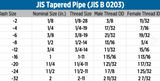
“Japanese fitting” can describe several connections. JIS designs may use BSPP-based parallel threads and a 30-degree seat, tapered pipe threads, metric threads, or OEM-specific geometry. Machine brand helps locate documentation but does not identify the seal. JIS 30-degree ends require seat confirmation Some JIS hose adapters use BSPP threads with a 30-degree flare seat. The seat, not the parallel