HGW Resources

HGW Blog

Practical guides for identifying hydraulic fittings, comparing connection styles, checking applications, reviewing materials, and finding relevant HGW product categories.

Fitting Guides

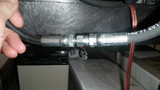
Turn STAMPED Hose Data into a Repeatable Hydraulic Assembly Specification

Oct 27th 2022

STAMPED is useful only when each letter produces information that another technician or supplier can verify. “Same as the old hose” is not a specification, and a photograph rarely shows pressure, fluid compatibility, temperature, or the internal condition of a failed assembly. Use Size, Temperature, Application, Material, Pressure, Ends, and Delivery to collect the operating facts. Then connect th
Materials

Stainless Tube Bending Methods: Controlling Flattening, Wrinkles, and Springback

Oct 19th 2022

Bending stainless tube changes more than its direction. Material on the outside of the bend stretches and becomes thinner, material on the inside compresses and can wrinkle, and the cross-section tends to flatten. After the tooling releases, elastic recovery opens the angle through springback. A successful bend keeps those changes within the limits required by the assembly. The method depends on t
Materials

How Forging and Casting Shape Stainless Steel Components

Oct 13th 2022

Forging and casting describe how a stainless steel component takes shape, not the complete quality of the finished part. Forging deforms solid metal with compressive force. Casting fills a mold with molten alloy and allows it to solidify. Those different thermal and mechanical histories influence grain flow, possible defects, shape complexity, machining, cost, and inspection. Neither process is au
Fitting Guides

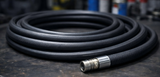
How Hose Ends Attach and Disconnect: Crimp, Barb, Push-On, Coupler, and Reusable Types

HGW Hydraulics on Oct 4th 2022

“Hose end fitting” can describe two different interfaces. One interface attaches a fitting permanently or mechanically to the hose. The other connects the finished hose assembly to a machine. A crimp stem and ferrule belong to the first interface; a quick-disconnect coupler may belong to the second. Treating them as six interchangeable fitting choices mixes attachment methods with connection funct
Connection Types

Pipe Fitting Identification: Shape, Thread, Nominal Size, and Schedule

Sep 28th 2022

Identifying a pipe fitting requires two different kinds of information. Its body shape explains what it does in the line: join two sections, change direction, split flow, or transition between sizes. Its connection details explain what it can actually mate with: thread form, nominal size, schedule or wall relationship, sealing method, and material. Stopping after the first step creates wrong order
Connection Types

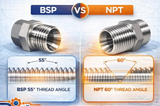
Distinguish NPT, BSPT, and BSPP Threads Before Selecting an Adapter

Sep 20th 2022

NPT and BSP are families of pipe threads, not interchangeable names for a connection that appears to be measured in inches. A field match must answer three questions: what thread form is present, whether it is tapered or parallel, and where the joint is designed to seal. Geography or equipment brand can guide the investigation, but geometry decides the part. Separate the three common candidates NP
Maintenance

Set Hydraulic Hose Pressure Margin Without Buying the Wrong Construction

Sep 15th 2022

A higher pressure number does not automatically produce a safer hydraulic hose assembly. Safety comes from matching the verified pressure envelope and every other service condition to a qualified hose-and-fitting system. Selecting the highest available class can add stiffness, cost, routing problems, tooling requirements, and slow-moving inventory while leaving the real failure mechanism untouched
Maintenance

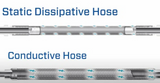
Control Static Charge Across the Entire Industrial Hose Transfer Path

Sep 7th 2022

Static control in a hose operation cannot be assigned to the hose alone. Charge can develop during fluid transfer and then accumulate on hose reinforcement, couplings, containers, vehicles, or isolated equipment. The hazard becomes serious when a discharge can occur in an atmosphere containing flammable vapor, gas, mist, or combustible dust. A facility should evaluate the entire transfer path unde
Materials

Compare Stainless and Carbon Steel Adapter Life Without a Fixed Multiplier

Sep 1st 2022

No defensible rule says that a stainless hydraulic adapter will always last a fixed number of times longer than a carbon-steel part. Service life changes with alloy, coating system, salt concentration, temperature, deposits, chemical exposure, installation damage, and maintenance. The useful comparison begins with the corrosion mechanism at the actual connection. Carbon steel life depends on its s
Connection Types

Identify NPT, BSPP, and ORB Ports from Geometry and Seal Location

HGW Hydraulics on Aug 23rd 2022

An unknown hydraulic port should be identified from measurable features, not from the fact that a fitting turns into it. NPT, BSPP, and SAE O-ring boss connections can have similar apparent diameters at some sizes, yet their thread forms and sealing locations are different. Partial engagement is not evidence of compatibility. First determine whether the thread is tapered NPT uses a 60-degree threa