
HGW Resources

HGW Blog

Practical guides for identifying hydraulic fittings, comparing connection styles, checking applications, reviewing materials, and finding relevant HGW product categories.

Connection Types

NPSM Hose Ends: Straight Threads, Swivel Seats, and Correct Mating Parts

May 25th 2023

National Pipe Straight Mechanical describes a parallel pipe thread used in a mechanically seated connection. In common hydraulic hose-end arrangements, the straight threads pull a swivel nut onto a compatible male nose while the mating seats form the seal. The threads retain the parts; they are not normally the primary fluid boundary. This distinction explains two frequent service problems. A stra
Connection Types

Identifying and Installing SAE O-Ring Boss Port Fittings

HGW Hydraulics on May 17th 2023

SAE O-Ring Boss is a port connection built around a replaceable elastomer seal. The male fitting’s straight thread supplies clamping force; an O-ring near the shoulder compresses against the port entrance to contain fluid. Keeping those jobs separate makes ORB easier to identify, install, and diagnose than a connection judged only by thread appearance. ORB commonly appears in hydraulic manifolds,
Connection Types

ORB or NPT Port Connections: Choose by Seal Location and Service Needs

HGW Hydraulics on May 11th 2023

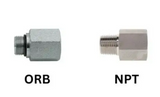
ORB and NPT are both used to connect fittings to ports, but they control leakage in different places. An SAE O-Ring Boss connection uses straight threads to retain the fitting and an O-ring at the port to seal. National Pipe Taper relies on tapered thread interference, normally with an approved sealant. That distinction affects installation, reuse, orientation, and troubleshooting. The better choi
Connection Types

ORFS Connections: Face-Seal Geometry, Identification, and Leak Diagnosis

HGW Hydraulics on May 2nd 2023

An O-Ring Face Seal connection separates the clamping function from the sealing surface. Straight threads draw a flat male face against the female end, while an O-ring captured in the male face provides the seal. This geometry is the reason ORFS is common in hydraulic systems exposed to pressure cycling and vibration. The benefit depends on correct parts and assembly. A flattened face, missing or
Fitting Guides

Cross-Reference Hydraulic Hose by Application Limits, Not Brand Series

Apr 26th 2023

A hydraulic hose cross-reference is not a declaration that one manufacturer’s series is equivalent to another. It is a documented comparison showing that a proposed hose-and-fitting system meets every controlling requirement of a particular assembly. A common SAE category is a useful starting filter, not the final approval. Capture the incumbent assembly before searching Record the hose layline, m
Fitting Guides

Selecting Hydraulic Hose by Construction, Routing, and Duty Cycle

Apr 18th 2023

Hydraulic hose carries fluid between pumps, valves, cylinders, motors, and other moving or difficult-to-pipe components. Its job is not defined by pressure alone. The same assembly must contain the fluid, tolerate heat and impulse, fit the route, resist the external environment, and work with the specified ends. That makes hose selection a system decision. Begin with the required bore and service
Maintenance

Hydraulic Hose Bend Radius: Why Installation Radius Matters

Apr 13th 2023

Hydraulic hose installations often have to route around pumps, coolers, filters, cylinders, actuators, and moving machine parts. In those layouts, bend radius is not a cosmetic detail. It directly affects hose life and system safety. If a hose is bent tighter than its minimum bend radius, the reinforcement and tube can be damaged even before the system is put into full service. What Minimum Bend R
Connection Types

ORFS Fittings: O-Ring Face Seal Benefits and Limits

Apr 5th 2023

ORFS fittings use an O-ring face seal to control leakage at the mating surface. The threads pull the connection together, while the O-ring seals at the flat face of the fitting. This design is why ORFS connections are common where hydraulic systems need strong leakage control, vibration resistance, and serviceable assembly. Thread Sizing ORFS fittings use straight threads. The outside diameter is
Materials

Divide a Hydraulic Circuit into Rigid Tube Zones and Flexible Hose Zones

Mar 30th 2023

Most hydraulic systems do not need a winner between stainless tube and hose. They need boundaries: rigid lines where geometry should remain fixed, flexible assemblies where components move or vibration must be isolated, and controlled transitions between the two. That zone-based approach is more useful than assigning the entire circuit to one material. Locate every source of relative movement Mark
Materials

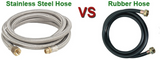
Stainless Steel Hose Fittings and Adapters: When They Make Sense

Mar 21st 2023

Stainless steel hose fittings and adapters are used when the system needs more than basic connection hardware. The added value is usually durability, corrosion resistance, cleanability, or longer service life in a demanding environment. Other materials such as carbon steel, brass, aluminum, and plastic can be right in many applications. Stainless steel makes sense when the operating conditions jus