
HGW Resources

HGW Blog

Practical guides for identifying hydraulic fittings, comparing connection styles, checking applications, reviewing materials, and finding relevant HGW product categories.

Maintenance

What a Hydraulic Hose Crimp Specification Controls

Jan 5th 2023

A crimp specification is the assembly recipe that connects one hose construction to one fitting system. It does more than provide a finished outside diameter. It identifies compatible parts, dies or machine settings, insertion and preparation requirements, measurement location, and acceptance tolerance. Ignoring any of those fields can produce an assembly that looks finished but does not develop t
Fitting Guides

Hydraulic Hose End Selection by Material, Attachment Method, and Seal

Dec 27th 2022

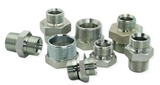
A hose end has to satisfy two interfaces: it must attach securely to the hose, and it must seal correctly to the machine port or mating fitting. Material selection affects corrosion, strength, temperature, and galling; attachment method controls how the stem and ferrule grip the hose; connection geometry determines where fluid is sealed. Choosing only by thread name or metal type leaves two-thirds
Fitting Guides

Hydraulic Hose Crimping from Cut Length to Final Inspection

Dec 21st 2022

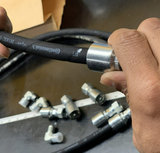
Crimping is the final forming step in a longer hose-assembly process. A crimper can close a ferrule to the programmed diameter, but it cannot correct the wrong hose, an incompatible stem, a poor cut, incomplete insertion, or contamination left in the bore. Reliable work begins with the current hose-and-fitting crimp specification. Verify the assembly system before cutting Identify hose manufacture
Materials

Selecting Stainless Pipe, Fittings, and Adapters as One Corrosion System

Dec 13th 2022

Stainless pipe does not become a corrosion-resistant system until its fittings, adapters, seals, welds, and external environment are considered with it. A 316 pipe connected through an unsuitable adapter or contaminated during fabrication can fail at the joint even when the straight pipe remains sound. Selection therefore begins with the fluid and exposure, then carries one material and connection
Connection Types

JIC vs NPT: One Seals on a 37° Flare, the Other in a Tapered Thread

Dec 8th 2022

JIC and NPT fittings can both appear on North American hydraulic equipment, but they create seals in different places. JIC uses straight threads to clamp two 37-degree flare seats together. NPT uses a tapered pipe thread that develops interference as the male and female parts engage, normally with the specified sealant practice. That difference means a caliper reading or a thread that starts turni
Connection Types

Verify a Hydraulic Flange from Port Geometry to Bolt Load

Nov 30th 2022

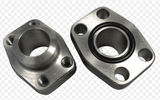
A hydraulic flange is a connection system, not just the metal head at the end of a hose. The port, flange head, O-ring, clamp halves or captive flange, bolts, washers, and mating tube or hose all have to match. Its advantage is a compact, serviceable connection for larger or highly loaded hydraulic lines, but only when the interface is correctly identified and assembled. Start at the machine port
Materials

How Zinc Coating Protects Steel Pipe—and How Galvanized Systems Age

HGW Hydraulics on Nov 24th 2022

Galvanized pipe is steel protected by a zinc coating. The coating delays attack on the steel through a combination of barrier protection and sacrificial corrosion. That protection is useful, but it is finite. Coating thickness and continuity, water or process chemistry, wet-dry exposure, temperature, flow, deposits, and contact with other metals all influence how the system ages. This makes galvan
Connection Types

Pipe Flange Selection by Joint Function, Access, and Service Conditions

Nov 15th 2022

A flange is both a structural joint and a sealing platform. It connects pipe to pipe, valves, pumps, vessels, and other equipment while creating access for inspection or disassembly. The flange body does not seal by itself: the facing, gasket or seal, bolt load, alignment, and connected piping have to work together. The families include welded designs such as weld-neck, slip-on, and socket-weld; r
Applications

Pressure Washer Hose Construction for Commercial and Industrial Cleaning

Nov 9th 2022

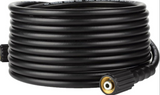
A pressure washer hose has to contain high-pressure water while being dragged, coiled, stepped near, exposed to cleaning chemicals, and repeatedly flexed at the gun and machine. Reinforcement helps carry pressure, but a durable assembly depends on how the inner tube, braid, cover, couplings, and routing work together. Commercial washing, vehicle cleaning, agricultural maintenance, and industrial s
Connection Types

Choose a Positioning Swivel or Live Swivel from the Required Motion

Nov 1st 2022

The word “swivel” can describe two very different duties. One connection moves so a hose can be oriented during installation; another is engineered to rotate or oscillate while the system operates. Treating these parts as substitutes can twist the hose or force a static seal to perform as a dynamic bearing. Draw the motion before choosing the component Mark the fixed component, moving component, r